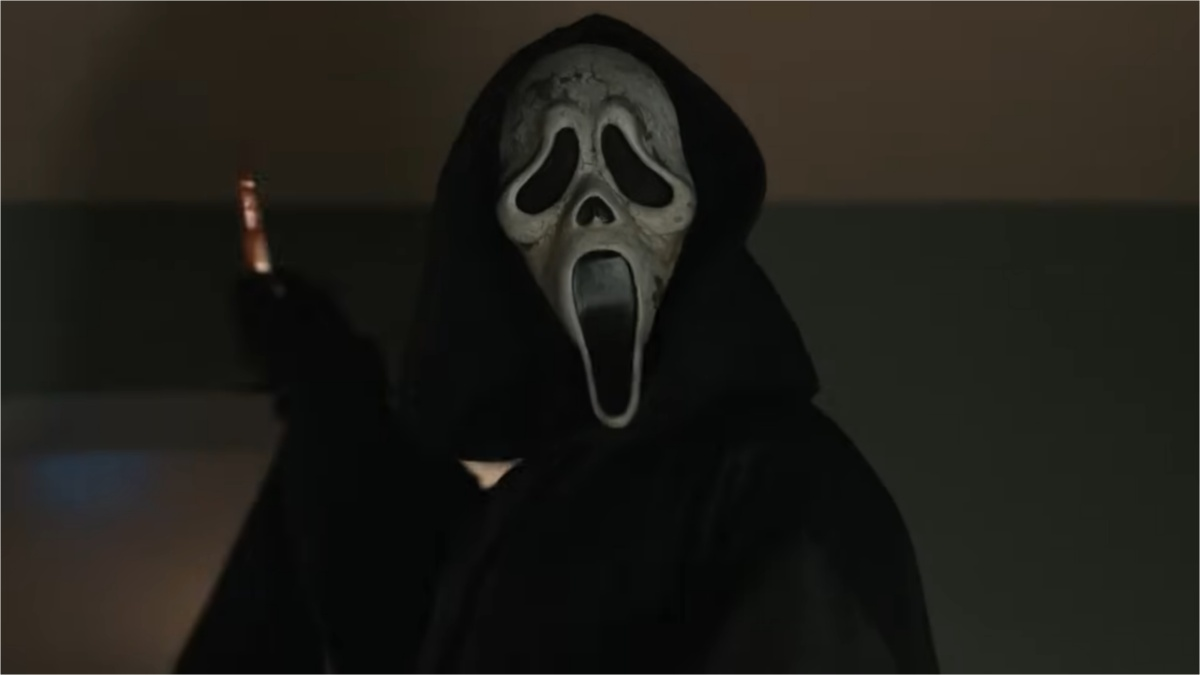
Few horror franchises have maintained a continuous story as successfully as Scream. Since the original film debuted in 1996, the series has followed a remarkably connected timeline, with each new Ghostface killer linked in some way to the murders that came before.
Unlike many long-running horror franchises that rely on reboots, alternate universes, or supernatural resurrections, Scream has built its legacy on consequences. Every murder, secret, and family connection continues to ripple through the series decades later.
For viewers looking to understand how all seven films fit together, here’s a complete breakdown of the Scream timeline and the events that continue to shape one of horror’s most enduring franchises.
The Event That Started Everything: Maureen Prescott’s Murder
Long before the first Ghostface mask appeared, the tragedy that set the entire franchise in motion was the murder of Maureen Prescott.
Approximately one year before the events of the first film, Maureen was killed in Woodsboro, California. Her death devastated her daughter, Sidney Prescott, and became the catalyst for nearly every major event that followed.
As later films reveal, Maureen’s past relationships and personal secrets created a chain reaction that would impact multiple generations of characters throughout the franchise.
While each Scream movie introduces a new mystery, nearly all roads ultimately lead back to the consequences of Maureen’s murder.
Scream (1996): The Original Woodsboro Murders
The first film takes place roughly one year after Maureen Prescott’s death.
As Woodsboro High School students begin falling victim to a masked killer known as Ghostface, Sidney finds herself at the center of a terrifying murder spree.
The killers are ultimately revealed to be Billy Loomis and Stu Macher.
Billy blames Maureen Prescott for the breakdown of his family after discovering she had an affair with his father. Rather than directing his anger toward Maureen alone, he channels it toward Sidney and those closest to her.
The original Scream established a formula that would define the franchise: Ghostface killers often view themselves as justified, even when their motivations stem from obsession, jealousy, or revenge.
Scream 2 (1997): Trauma Follows Sidney to College
Approximately two years later, Sidney attempts to move forward with her life while attending Windsor College. Unfortunately, Ghostface returns.
By this point, the Woodsboro murders have already been adapted into a fictional film series called Stab, introducing one of the franchise’s most important recurring themes: society’s fascination with violence and true crime.
The new killers are revealed to be Mickey Altieri and Debbie Salt, who is secretly Billy Loomis’ mother. While Mrs. Loomis seeks revenge for her son’s death, Mickey is motivated by something different: fame.
He hopes to become a celebrity through the murders themselves, foreshadowing themes the franchise would continue exploring for decades.
Scream 3 (2000): The Hidden History of the Prescott Family
Several years later, the story shifts to Hollywood during production of the latest Stab movie. The murders once again begin piling up, eventually leading to one of the franchise’s biggest revelations.
Ghostface is revealed to be Roman Bridger, a film director and Sidney’s previously unknown half-brother. Roman claims he helped set the original Woodsboro murders in motion by showing Billy Loomis evidence of Maureen Prescott’s affair years earlier.
Whether viewers fully accept Roman’s version of events or not, the revelation dramatically expands the mythology of the franchise and turns the Prescott family history into the foundation of the entire series.
Scream 4 (2011): Fame Becomes the Ultimate Motive
More than a decade later, Sidney returns to Woodsboro during another wave of Ghostface killings. By now, social media has begun reshaping how people seek attention and validation.
The killers, Jill Roberts and Charlie Walker, reflect that cultural shift. Jill’s motive is particularly chilling. She wants fame and sympathy, believing that becoming the sole surviving victim will transform her into a celebrity.
Years after its release, many fans and critics have come to view Scream 4 as one of the franchise’s most forward-thinking entries because of how accurately it anticipated influencer culture and the growing obsession with online attention.
Scream (2022): A New Generation Faces Ghostface
Often referred to by fans as Scream 5, the 2022 film introduces a new generation of characters while reconnecting the story to the original Woodsboro murders.
The film’s biggest revelation is that Sam Carpenter is Billy Loomis’ daughter. That connection reinforces one of the franchise’s recurring themes: the past never truly stays buried.
The killers, Richie Kirsch and Amber Freeman, are driven by frustration with the direction of the fictional Stab franchise.
Their actions serve as a commentary on toxic fandoms, online outrage, and the increasingly intense relationship between audiences and the entertainment they consume.
Scream VI (2023): Ghostface Comes to New York
For the first time in franchise history, the action moves away from Woodsboro. Sam and Tara Carpenter relocate to New York City in an attempt to escape their past, but Ghostface follows.
The killers are revealed to be Detective Wayne Bailey and his children, who are seeking revenge for Richie Kirsch’s death.
Unlike some previous entries that focused on fame or media influence, Scream VI returns to a more traditional revenge narrative while expanding the scale of the franchise beyond its small-town roots.
The move to New York also demonstrated that Ghostface can thrive outside Woodsboro while still maintaining the series’ core identity.
Scream 7 (2026): Bringing the Story Full Circle
After the franchise spent several films expanding its focus beyond Sidney Prescott, Scream 7 returns attention to the character who has been at the center of the series since the beginning.
The film reestablishes Sidney as a major figure in the ongoing Ghostface saga while continuing the franchise’s tradition of examining how past events continue to shape the present.
Without diving into major spoilers, Scream 7 reinforces one of the series’ longest-running ideas: no matter how much time passes, the consequences of earlier Ghostface killings never fully disappear.
More than two decades after the original Woodsboro murders, the franchise continues to find new ways to connect its present-day stories to its earliest chapters.
The Scream Timeline at a Glance
For viewers looking for the chronological order of major events, the franchise unfolds as follows:
- Maureen Prescott is murdered
- Scream (1996)
- Scream 2 (1997)
- Scream 3 (2000)
- Scream 4 (2011)
- Scream (2022)
- Scream VI (2023)
- Scream 7 (2026)
One of the franchise’s greatest strengths is that every installment builds upon previous events rather than ignoring them.
That continuity gives the series a level of emotional weight that many horror franchises struggle to maintain.
What Connects Every Ghostface Killer?
Although each Ghostface has a unique identity, many share surprisingly similar motivations.
Some seek revenge. Others crave fame. Several believe they are correcting perceived injustices. Nearly all of them view themselves as the hero of their own story.
This recurring pattern is one reason the franchise remains so compelling. Ghostface is not a supernatural monster. The mask can be worn by anyone.
Instead, the costume acts as a vessel for obsession, entitlement, grief, resentment, and revenge. The face behind the mask changes, but the psychological patterns often remain remarkably similar.
In many ways, Ghostface functions less as a single villain and more as a reflection of the cultural anxieties of each era.
The Secret Importance of the Stab Movies
One of Scream’s most unique storytelling devices is the fictional Stab franchise that exists within the films themselves.
Beginning with Scream 2, the Stab movies transform real murders into entertainment. As the timeline progresses, those films become increasingly important to understanding the motivations of future killers.
The franchise uses Stab to examine how violence is commercialized, how true crime becomes entertainment, and how media narratives can influence real-world behavior.
It’s a concept that feels even more relevant today than when it was first introduced.
Why Scream Still Works Nearly 30 Years Later
Many horror franchises survive because audiences become attached to an iconic villain.
Scream survives because it constantly reinvents what Ghostface represents. The original film satirized slasher movie conventions.
Scream 2 explored media sensationalism. Scream 3 examined Hollywood storytelling.
Scream 4 anticipated influencer culture. The 2022 film focused on toxic fandoms. Scream VI explored public perception and competing narratives.
Rather than repeating the same formula, each installment uses its mystery to explore cultural conversations happening at the time of release.
That adaptability has helped keep the franchise relevant across multiple generations of viewers.
Why the Scream Timeline Is Different From Other Horror Franchises
One reason fans continue debating the franchise decades later is that Scream treats its history differently than many of its peers.
Series like Halloween, Texas Chainsaw Massacre, and Terminator have repeatedly rebooted their timelines or ignored previous entries. Scream, however, largely embraces its continuity.
Actions have consequences. Characters remember past events. New killers are often motivated by crimes committed years earlier.
That commitment to continuity gives viewers a reason to stay invested, because every chapter feels like part of a larger story rather than a disconnected sequel.
The Legacy of Ghostface
With seven films now spanning nearly three decades, Scream has become one of horror’s most connected and self-aware franchises.
The masks change. The motives evolve. New victims emerge. But the central idea remains the same.
Every Ghostface killer is shaped by the events that came before them, and every new chapter adds another layer to a story that began with a murder in Woodsboro years ago.
That’s what has allowed Scream to endure when so many other horror franchises have faded away. The story isn’t really about the mask.
It’s about the people behind it, the consequences of their choices, and the way the past continues to haunt the future.


A father of two girls, Logan loves family life. He’s a total news junkie, whether that news includes politics, breaking information, or internet drama. If it’s trending, he’s got the scoop. His community activism also gives him a special insight into the workings of several news topics.